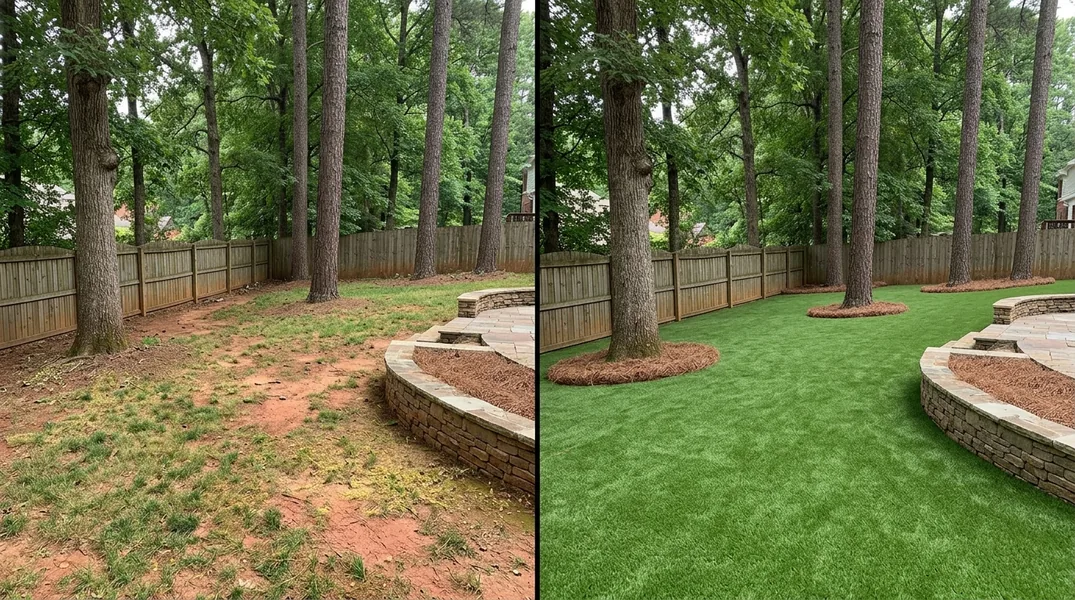
Why Atlanta Homeowners Are Adding Putting Greens to Their Backyards
Golf enthusiasts in Atlanta are discovering that a backyard putting green transforms outdoor living. Whether you're a serious golfer looking to sharpen your short game or someone who simply enjoys the sport recreationally, having a Putting Green Installation at home offers convenience, entertainment value, and a unique focal point for your landscape.
The appeal goes beyond golf. A well-designed putting green adds visual interest to your yard, increases property value, and creates a gathering space for family and friends. Unlike natural grass putting greens that require constant maintenance, modern artificial putting green turf delivers the look and feel of a championship course without the endless watering, mowing, and chemical treatments. For Atlanta homeowners with busy schedules and Georgia's hot, humid climate, this is a game changer.
Understanding Putting Green Turf: What Makes It Different
Not all artificial grass is created equal, and putting green turf is a specialized product designed specifically for golf applications. Standard Residential Artificial Grass Installation turf is engineered for durability and comfort underfoot, but putting green turf must meet different performance standards. The fiber density is higher, the pile height is shorter and more uniform, and the backing system is engineered to allow proper ball roll and drainage.
True putting green turf mimics the texture and firmness of real greens found on golf courses. Premium putting green products feature multiple fiber types that create the subtle variations in surface that affect ball speed and break. The turf face is typically between 0.5 and 0.75 inches tall, compared to 1.5 to 2 inches for residential grass. This shorter pile allows the ball to roll predictably and gives you consistent, realistic putting conditions right in your backyard.
The True Roll Factor: What You Need to Know About Ball Speed and Slope
True roll is the term used to describe how realistically a golf ball moves across your putting green. Achieving true roll requires more than just quality turf. It depends on proper base preparation, correct slope and drainage, and the specific characteristics of your putting green turf product. When a ball is struck on a professionally installed putting green, it should roll at a speed and trajectory that matches real-world golf conditions, allowing you to practice your stroke with meaningful feedback.
The foundation matters tremendously. A poor base leads to uneven settling, soft spots, and inconsistent ball roll. Professional installers use a compacted base layer, often combined with a perforated backing system, to ensure proper drainage and a firm, stable surface. Slope design is equally critical. A putting green needs subtle contouring to shed water and create interesting break patterns for practice. Most residential putting greens incorporate 1 to 2 percent slope, which is enough for drainage and visual interest without making every putt impossibly difficult. When you invest in quality putting green installation, you're investing in a surface that will provide realistic, enjoyable golf practice for years to come.
Designing Your Backyard Putting Green: Layout and Sizing Considerations
Before selecting a contractor, think carefully about your space and how you'll use it. A backyard putting green can range from a small practice green around 100 to 200 square feet up to a full-featured course-style layout of 500 square feet or more. Most residential installations fall in the 200 to 400 square foot range, offering enough variety for enjoyable practice without consuming your entire yard. Consider the shape of your available space and how the green will integrate with the rest of your landscape design.
Functional design includes multiple hole locations, varied slope patterns, and strategic bunkering or obstacles. Many homeowners work with their installers to create a layout that includes a chipping area adjacent to the green, allowing for short-game practice beyond just putting. Think about sun exposure, as artificial turf performs best with good drainage and air circulation. You'll also want to consider sightlines from your patio or deck and how the green complements your home's architecture. A well-designed putting green should feel like a natural extension of your outdoor living space, not an afterthought wedged into a corner.
Backyard Putting Green Cost in Atlanta: What to Budget
The pricing for a backyard putting green installation varies based on size, complexity, and the quality of materials you choose. A basic putting green in the 200 to 300 square foot range typically costs between $4,000 and $8,000 fully installed. Larger, more elaborate designs with multiple hole locations, significant slope work, and premium turf products can run $10,000 to $20,000 or beyond. In Atlanta, where the climate and soil conditions are well understood by local installers, you can expect competitive pricing without sacrificing quality.
Several factors influence your final cost. The existing condition of your yard matters. If you have good drainage and relatively level terrain, installation is straightforward and less expensive. Poor drainage, significant grading work, or removal of existing landscape features will increase labor and materials. The quality of putting green turf you select is another major variable. Premium products that offer more realistic ball roll and durability cost more upfront but last longer and perform better. Base preparation is never an area to cut corners. A properly engineered base system ensures your green will maintain its true roll and drainage for 10 to 15 years or more. To understand the specific investment for your property, reach out to Atlanta Turf Installation at (470) 943-2510 to discuss your project and receive a free estimate.
Installation Process: From Site Preparation to First Putt
Professional putting green installation follows a methodical process that ensures lasting performance. The work begins with a detailed site assessment, measuring the space, evaluating drainage, and marking the proposed layout. Next comes base preparation, which typically involves removing existing turf or debris, grading to achieve proper slope, and installing a compacted foundation layer. Many installers use a combination of crushed stone and sand, compacted to create a firm, stable base that supports the putting surface and facilitates drainage.
Once the base is ready, the putting green turf is laid out and seamed together. Professional installers use specialized adhesives and seaming techniques to ensure seamless transitions that won't catch a rolling ball. The edges are secured and finished, often with landscape borders or edging materials that define the green and prevent turf migration. After installation, the green needs a brief break-in period as the turf settles and the backing system cures. Most installers recommend waiting a few days before heavy use and a week or two before the green reaches optimal performance. Within a month, your new putting green will be performing at its best, ready for daily practice and weekend entertaining.
Looking for a professional artificial grass installation company in Atlanta? Atlanta Turf Installation responds fast for all your artificial grass installation needs.
Get a Free Quote