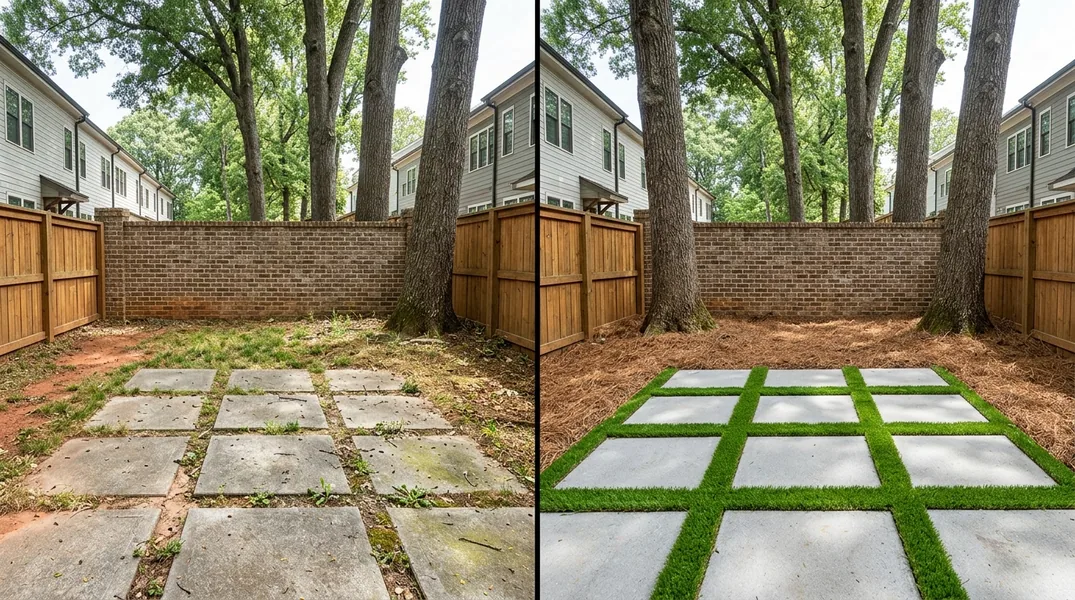
Why Atlanta Homeowners Are Making the Lawn-to-Turf Conversion
If you're a homeowner in Atlanta, you've likely noticed how demanding natural grass maintenance can be. Between the Georgia heat, unpredictable rainfall, and the constant need for mowing, fertilizing, and pest control, keeping a traditional lawn looking pristine requires significant time and money. That's why more Atlanta residents are exploring lawn-to-turf conversion as a practical alternative.
A turf removal and replacement with artificial grass eliminates the guesswork of seasonal lawn care. You won't need to worry about brown patches during dry spells, weeds taking over your yard, or expensive landscape maintenance bills. Modern artificial grass looks remarkably natural, feels soft underfoot, and requires only occasional rinsing and light grooming. The conversion process, while straightforward, does involve several important considerations that homeowners should understand before moving forward with their project.
Understanding the Grass Removal and Site Preparation Process
Before any artificial turf can be installed, your existing lawn must be properly removed. This turf removal process is more involved than simply pulling up grass. A professional installation team will typically remove the top layer of sod, then excavate several inches of soil to create a proper base for your new artificial surface. The depth of removal depends on your yard's drainage needs and the thickness of your current lawn, but most projects require removing between 2 to 4 inches of material.
Once the old grass is gone, the real work begins with site preparation. The exposed soil must be graded to ensure proper water drainage, as standing water can damage artificial turf and create unpleasant odors. A compacted base layer, usually made of crushed stone or recycled asphalt, is then installed to provide stability and drainage. This foundation is critical to the longevity of your new turf. When you choose Residential Artificial Grass Installation with Atlanta Turf Installation, our team handles every step of this preparation with precision, ensuring your new lawn will last for years without settling or shifting.
Managing Tree Roots During Artificial Grass Replacement
One of the most common concerns homeowners raise during lawn-to-turf conversion is how to handle tree roots. If your yard has mature trees, their root systems may extend across the area where you plan to install artificial grass. Unlike natural grass, which can coexist with shallow tree roots, artificial turf requires a stable, even surface. Exposed or shallow roots can create bumps and uneven spots that make the turf uncomfortable to walk on and difficult to maintain.
The solution typically involves carefully removing shallow roots that sit near the surface, while preserving the tree's health. A skilled installation team will assess which roots need to be trimmed and which can be left in place. In some cases, roots can be covered with additional base material to create an even surface. However, it's important to never remove large structural roots that support the tree's stability. If you have significant tree root concerns in your yard, contact Atlanta Turf Installation at (470) 943-2510 to discuss your specific situation. Our team can evaluate your trees and recommend the best approach to ensure both your new turf and your trees thrive together.
Watering Rules and Maintenance After Your Conversion
One of the biggest advantages of artificial grass is the elimination of traditional watering schedules. Unlike natural grass, which requires regular irrigation during hot Georgia summers, artificial turf needs no watering to stay green and healthy. This is especially valuable in Atlanta, where water restrictions are sometimes implemented during drought conditions. Your new turf will maintain its vibrant color year-round without consuming thousands of gallons of water annually.
That said, occasional rinsing is recommended to keep your artificial grass fresh and clean. A light spray with a garden hose once or twice a month helps remove dust, pollen, and debris that naturally accumulate on the surface. For pet owners considering Pet Turf & Dog Run Installation, rinsing becomes slightly more important to maintain hygiene. Beyond occasional rinsing, your maintenance routine involves light brushing a few times a year to keep the grass fibers standing upright and looking full. This minimal maintenance requirement is one reason why artificial grass has become so popular among busy homeowners who want an attractive yard without the constant upkeep.
What to Expect During the Installation Timeline
Understanding the timeline for your lawn-to-turf conversion helps you plan accordingly and prepare your household for the work ahead. Most residential artificial grass installation projects take between 3 to 7 days to complete, depending on the size of your yard, site conditions, and any complications like extensive tree roots or drainage issues. The first day or two involves removing your existing lawn and preparing the base, which is the most labor-intensive phase. You'll notice significant activity in your yard during this time, with equipment and crews working to clear and grade the area.
Once the base is prepared and compacted, the actual turf installation begins. The artificial grass is carefully measured, cut to fit your yard's dimensions, and laid out across the prepared surface. Seams are sealed, and the turf is secured along edges and around any landscape features. The final touches include brushing the grass fibers to ensure they stand upright and look natural. Throughout the process, a professional installation team will keep your property as clean as possible and answer any questions you have about your new lawn. For a detailed timeline specific to your property, reach out to Atlanta Turf Installation for a free estimate.
Residential Artificial Grass Installation Cost in Atlanta: What to Budget
The cost of artificial grass replacement varies based on several factors, including the size of your yard, the quality of turf you select, and the complexity of your site preparation. Most homeowners in the greater Atlanta area can expect to invest between $8 to $15 per square foot installed, though this can vary. A typical residential project covering 1,000 to 2,000 square feet might range from $8,000 to $30,000 depending on material choices and site conditions. While this represents an upfront investment, the long-term savings in water bills, fertilizer, pest control, and landscaping labor often justify the expense within 5 to 7 years.
To understand the exact pricing for your specific project, Atlanta Turf Installation offers free, no-obligation estimates. Our team will visit your property, assess the scope of work needed, and provide a transparent quote that breaks down all costs. We also work with homeowners to explore different turf quality options that fit various budgets. Whether you're looking for a basic installation or premium turf with enhanced durability and appearance, we can help you find the right solution. Call us today at (470) 943-2510 to schedule your free estimate and get a clear picture of your investment.
Looking for a professional artificial grass installation company in Atlanta? Atlanta Turf Installation responds fast for all your artificial grass installation needs.
Get a Free Quote